Morning digest: October 22, 2026
The first final rule under the GENIUS Act is out: the OCC dropped its presumption against exchange-paid stablecoin rewards and will judge them one at a time. Solana’s Alpenglow is now live, Standard Chartered is buying all of Zodia Custody, and LayerZero set Nov. 30 for its Zero chain and ATLAS exchange engine. Health leads with flywheel split squats that made soccer players quicker at changing direction, plus a 10 p.m. phone cutoff that protects teen sleep. Locally, Prince William adopted its 2027 legislative agenda, Manassas broke ground on a $41 million control tower, and a bear has been checking porches in Centreville.
Blockchain: a softer stablecoin-rewards rule, Alpenglow live, a bank buys its custodian
The OCC finalizes the first GENIUS Act rule and softens its line on rewards. The GENIUS Act is the 2025 US law that sets federal rules for dollar stablecoins, and the Office of the Comptroller of the Currency, which regulates national and trust banks, is the first agency to finalize its part. The rule covers reserves, redemption, risk management, custody at OCC-supervised banks and foreign issuers, and takes effect Jan. 18, 2027; anti-money-laundering rules come separately with Treasury, and the application window opens later. The big change from the draft is about rewards paid by third parties such as exchanges. The draft presumed some of those deals were illegal; the final rule drops that presumption and reviews each one case by case, with no safe harbor for existing programs. Issuers still can’t pay holders interest directly. Why it matters: exchange rewards on USDC-style balances survive for now, but each program needs sign-off, and it’s the same bank-versus-crypto fight that is stalling the broader Clarity Act (OCC; CoinDesk).
Alpenglow is live on Solana. The new consensus activated around 9:54 a.m. ET Wednesday at epoch 1064, replacing TowerBFT. The target is about 150 milliseconds to final settlement; one early reading showed about 202 ms, but the official dashboard still showed several seconds shortly after the switch, so the real number needs a few days to settle. Anza says next up are Rotor, a faster way to spread block data, and “Quantumglow” for post-quantum security (Solana; The Block).
Standard Chartered signs to buy all of Zodia Custody. Zodia is the crypto custodian the bank incubated, licensed in Singapore, Hong Kong, Australia, the UAE and Luxembourg. Custody folds into the bank’s Securities Services unit, and the software side is spun out as Zodia Solutions under SC Ventures. Terms weren’t disclosed, and regulators still have to approve. A global systemically important bank is putting crypto custody inside its regulated core business, not a venture arm (The Block).
LayerZero sets Nov. 30 for Zero and ATLAS. Zero is LayerZero’s own high-throughput chain. ATLAS is a “headless” exchange engine on it that handles matching, clearing, settlement and risk, while outside trading venues build their own front ends. It launches with more than a dozen venues and 200,000 transactions per second of initial capacity; after venue rebates of 20–65%, 75% of remaining fees buy and burn the ZRO token (LayerZero; crypto.news).
Aerodrome and Velodrome merge into Aero. The two DeFi exchanges relaunched as one across seven networks, including Base, Ethereum, OP Mainnet, Arbitrum and Robinhood Chain, with changes to their token and liquidity-incentive setup (The Block).
Briefly:
- Slice exploit on Base, about $41K: the commerce protocol’s FundsModule paid out based on what caller-chosen contracts reported rather than checking that funds arrived, so an attacker used two fake contracts to claim about 8.7 ETH and 19.8K USDC. It was paused and patched about 1.5 hours later. It’s the same bug class as several small October exploits: trusting a reported number instead of measuring your own balance (The Crypto Times).
- Generali launched a tokenized unit class of its Luxembourg money-market fund, pitched as collateral and liquidity for stablecoin issuers (Investment International).
- France proposed, for the EU’s MiCA review, that licensed platforms that route customers to DeFi protocols must vet them and could be liable if they skip due diligence; it’s a consultation position, with the Commission’s report due by mid-2027 (Cointelegraph).
- Japan: yen-stablecoin issuer JPYC, SBJ Bank and LINE NEXT will pilot topping up JPYC straight from a bank account in the Unifi wallet; no launch date (insigtX).
- swanUSD, a DAO-governed dollar backed by Lido’s wrapped staked ether and pitched as “a dollar for black swan events,” launches today at noon ET; there’s no fiat reserve, so its peg rests on over-collateralization and liquidations (Outposts).
- Business: Dogecoin Labs launched with Dogecoin Foundation backing, bundling the MyDoge wallet, the DogeOS EVM testnet and a merchant-payments app; Grayscale expanded in-kind creations and redemptions to 10 crypto ETFs and trusts (The Block).
- Markets: bitcoin briefly neared $85,000, then slipped back to about $82,000 overnight as AI and tech stocks sold off; ether is near $2,400. Spot bitcoin ETFs took in about $1.08B over three days, below the pace of past big rallies. The Fed meets Oct. 27–28 (CoinDesk).
Health: flywheel split squats, a 10 p.m. phone cutoff, and how much cardio helps sleep
The first study is in high-level athletes; the diet and cancer studies are general-population cohorts, and the two exercise studies at the end are clinical groups, labeled as such.
Flywheel split squats beat regular split squats for change-of-direction speed. Twenty-six high-level male soccer players were randomized to Bulgarian split squats twice a week for 8 weeks, either on a flywheel device or with traditional weights, with the same structure and movement; 22 finished. The flywheel group improved much more on agility tests (T-test, Pro-agility, Arrowhead both ways) and a soccer-style cutting drill, with only weak evidence for the 10 m sprint and none for the 30 m sprint. How to use it: if cutting and braking speed matters, swap barbell or dumbbell split squats for flywheel split squats for an 8-week block. Expect gains in direction changes, not straight-line speed. Limits: small, men only, reported as Bayes factors rather than seconds, retrospectively registered (BMC Sports Science, Medicine and Rehabilitation).
Late-night phone use cost teens sleep minute for minute. In 425 US adolescents (mean age 14.8) from the ABCD Study, with 7,591 nights of passively tracked phone use and Fitbit sleep, each extra minute of phone use after 10 p.m., above a teen’s own average, pushed sleep onset about 0.9 minutes later and cut total sleep by about 0.4 minutes. On heavier nights teens slept about 20 minutes less, and use in the last 5 minutes before falling asleep added wakefulness early in the night. How to use it: a phone cutoff around 10 p.m., and a phone-free last stretch before lights-out. Limits: observational, teens on Android only, Fitbit rather than a sleep lab (JAMA Pediatrics).
Every major “healthy diet” score tracked with slower epigenetic aging; DASH was the most consistent. Across 6,470 adults in Germany’s Rhineland Study, replicated in 1,034 from EPIC-Potsdam, all ten diet-quality indices (Mediterranean, DASH, MIND, Nordic, plant-based and others) were linked to a slower DunedinPACE aging clock, and a more inflammatory diet to a faster one. DASH had the strongest, most consistent signal. Takeaway: pick a healthy pattern you can sustain; DASH-style means vegetables, fruit, whole grains, low-fat dairy, nuts and legumes, with less salt, red meat and sugar. Limits: general population, cross-sectional, small effects, and aging clocks are markers, not lifespan (Nature Communications).
For colon cancer, what’s in processed food mattered more than the label. In 461,682 older US adults (NIH-AARP, followed to 2018, 10,075 cases), total ultra-processed food intake was not linked to colorectal cancer. Whole grains, fiber, dairy and calcium from ultra-processed sources were linked to lower risk, and meat from them to higher risk. Takeaway: keep whole-grain breads and cereals and dairy, and cut processed meats like bacon, ham and deli meats. Limits: general population, observational, a single diet questionnaire, and colorectal cancer only (PLOS Medicine).
Clinical group: aerobic exercise helped sleep the most, with a sweet spot around 2–2.5 hours a week. A network meta-analysis of 23 randomized trials (1,478 middle-aged and older adults with sleep disorders) found aerobic exercise improved sleep-quality scores more than mind-body or combined exercise. The dose curve peaked near 539 MET-minutes a week, roughly 135 minutes of brisk walking or 75 minutes of jogging, with no extra benefit beyond that. Limits: low-to-moderate certainty, self-reported sleep (Journal of Exercise Science & Fitness).
Clinical group: four minutes a day helped older adults with walking difficulty. In 97 inactive adults 65 and older, a daily routine of four 30-second exercises, with video coaching and email reminders, cut five-times sit-to-stand time by 2.3 seconds and added 4.2 chair stands in 30 seconds over 12 weeks, versus a waitlist. People did it on 81% of days. A realistic starting point for a deconditioned relative. Limits: the trial was published in March (Penn State publicized it this week), unblinded, and the lead author has a financial stake in exercise-dissemination companies (PLOS One).
General and local
Markets: stocks rose Wednesday, with the S&P 500 up 0.58% to 7,757 and the Nasdaq up 1.05%, led by SpaceX and Tesla; Netflix fell more than 5% on a weak forecast. The 10-year Treasury yield held near 5.12%, and the average 30-year mortgage rate dipped to 7.41%. Weekly jobless claims come at 8:30 a.m. today, with 200,000 expected (CNBC).
Prince William supervisors adopted the 2027 legislative agenda unanimously on Oct. 20, and unanimously authorized school bonds. They also approved letting fulfillment and distribution centers use an existing industrial parcel on Bristow Road across from Bristoe Station Battlefield Heritage Park, with no new buildings, after residents objected about signage and battlefield screening. A Gainesville heritage and tourism small-area plan was deferred (Zonewire). After a staff presentation found no violations under the current data-center noise limits, supervisors signaled they intend to revisit the rules (Potomac Local).
Manassas breaks ground on a $41 million control tower. The 145-foot tower at Washington Manassas Airport will take about two years to build, with the FAA paying $26 million, Virginia $1 million and the city $14 million. The airport got its FAA commercial-service certificate in August and is aiming for passenger flights by the end of 2027, with officials eyeing 24 daily departures within five or six years; no airlines are signed yet. Fun fact: the current roughly 70-foot tower was bought secondhand. In 1992 the city took apart a used tower at Centennial Airport near Denver, trucked it to Manassas and put it back together (InsideNoVa).
Fairfax City meeting videos and agendas are offline. Granicus, which hosts meeting media for many local governments, took its PHP-based Media Manager offline as a precaution after an FBI warning about PHP flaws. The city says there was “no breach, malicious activity, or exploitation detected” and expected a fix within a day; Vienna is affected too. If a meeting video won’t load today, that’s why (FFXnow).
Lighter note: Centreville has a porch-visiting bear. A bear has been wandering through the Sequoia Farms and Belle Pond Farm neighborhoods, getting into trash cans and reportedly “visiting porches.” Fairfax County asks residents to lock up their trash, give the bear plenty of space, and report sightings to Animal Services at 703-691-2131 (WUSA9).
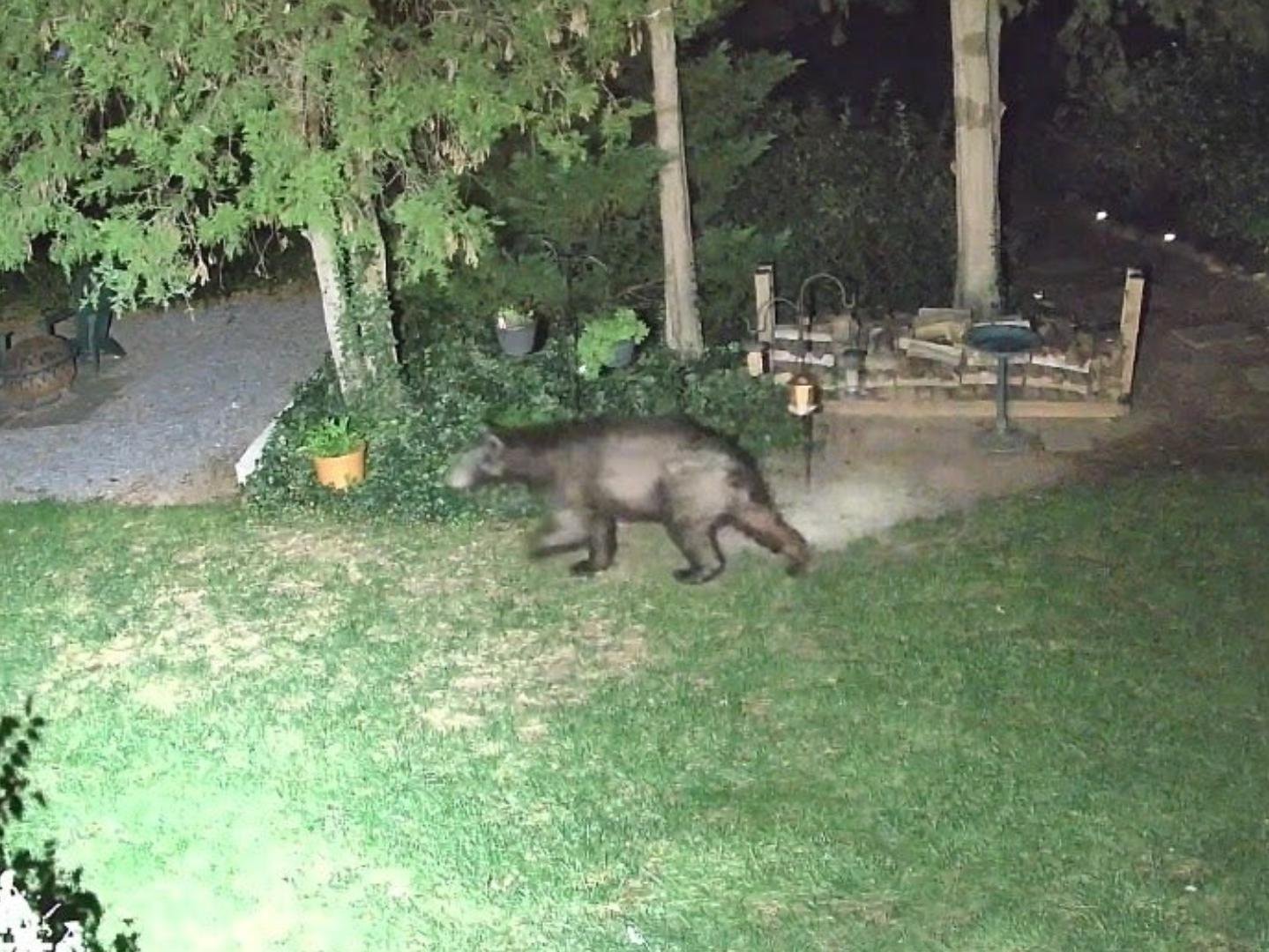
Photo: WUSA9, via wusa9.com.
Science: an expert vouches for an AI proof of a 1959 conjecture
Nagata’s conjecture, as an algebraic geometer explains it. Nagata’s 1959 conjecture is one of the best-known open problems about plane curves: roughly, a curve can’t pass through many generic points “too heavily” for its degree. Until now it was known only when the number of points is a perfect square. OpenAI’s math release last month claimed a proof for all cases of ten or more points, and now Jenia Tevelev of UMass Amherst has posted 19 pages of notes, from a talk he gave, walking through what he calls OpenAI’s “remarkably simple proof,” aimed partly at non-experts. Two independent groups also report that OpenAI’s Lean formal statement of the theorem passed their checks. It’s the first OpenAI headline claim in algebraic geometry with this kind of expert backing. Caveats: expository notes, not a referee report; nothing is peer-reviewed, and the wider claims in the same family are less verified (arXiv; OpenAI math).
Russia: a huge drone night over Moscow, and Voronezh hit too
Moscow’s mayor said 630 drones headed for the Moscow region from Wednesday evening, with 163 downed on approach to the city; two people were hurt in New Moscow. Vnukovo, Domodedovo, Sheremetyevo and Zhukovsky were restricted overnight and have reopened, but Aeroflot postponed, cancelled or diverted some flights and warns of further delays, so check flight boards before leaving for the airport. In Voronezh, 44 drones were downed over the city and region; nobody was reported hurt, but debris damaged roofs, facades, cars and power lines (mos.ru; Kommersant; RIA Novosti).
Bottom line
Stablecoin rewards survive the first GENIUS Act rule, case by case. Solana’s Alpenglow is live, a major bank now owns its crypto custodian outright, and LayerZero’s exchange engine arrives Nov. 30. In Health, the levers are flywheel split squats for cutting speed, a 10 p.m. phone cutoff for sleep, DASH-style eating, and fewer processed meats; for poor sleep, about 2–2.5 hours of cardio a week looks like the sweet spot. Locally, Prince William’s legislative asks are set, Manassas’s secondhand tower is getting a $41 million successor, and Centreville residents should lock up their trash.