Morning digest: November 7, 2026
Aave is buying its way into fixed-rate lending, while Immutable plans to become an Ethereum rollup. Bitcoin ETFs lost another $411.9 million Friday, and Binance’s attackers are converting stolen tokens into bitcoin. In health, a smartwatch study offers a useful reminder: a watch alert is a reason to check with a cuff, not a diagnosis. Fairfax has 16 more pedestrian-safety projects, October hiring beat expectations, and two South Carolina piglets were detained for ‘fleeing and squealing.’
Blockchain: fixed rates, rollups and exchange security
Aave buys fixed-rate lending expertise. Aave Labs acquired Avon’s team, fixed- and floating-rate lending protocols and onchain order book. The plan is to build fixed-rate capabilities into Aave, which says it has more than $33 billion in deposits and $13 billion in active loans. These products are not announced as live; deal terms and a launch date were not disclosed. (Aave Labs).
Immutable plans an Ethereum rollup. The gaming chain targets mid-2027 for a move to the OP Stack, keeping its state and chain ID. Blocks would fall from 2 seconds to 1, with Ethereum data availability and proof-based bridging replacing its Axelar-based bridge. The tradeoffs: slightly higher fees, native withdrawals around seven days and a several-hour migration outage. Permissioned fault proofs come first, with zero-knowledge validity proofs planned later; the current game testnet is due to retire by year-end. (Immutable).
Another $411.9 million leaves bitcoin ETFs. Friday’s U.S. spot bitcoin ETF net outflow followed roughly $430 million Thursday. BlackRock’s IBIT accounted for $403 million of Friday’s redemptions; Fidelity’s FBTC brought in $42.8 million. Bitcoin was around $76,000 in Friday reporting after the tech-led selloff—this is a dated market snapshot, not a fresh Saturday quote. (Blockchain.News, citing Farside).
Binance laundering shifts toward bitcoin. Elliptic says attackers swapped about $124 million of stolen altcoins into bitcoin through a network spanning over 20,000 wallets, 16 chains and 65,000 transactions, but estimates that only a negligible amount has been cashed out. About $2.85 billion is frozen and $3.11 billion remains in linked wallets; those figures do not fully reconcile with the reported $6.43 billion haul. Binance aims to restore HYPE, INJ, APT, PLASMA, NEAR and LTC withdrawals by the end of next week, not a guaranteed reopening date. Elliptic sees automation, but no evidence of AI agents making laundering decisions. (The Block).
Gnosis Pay exposes data, not funds. Its legacy branded-card system was breached November 3; containment began within two hours of detection. The company says funds and its separate enterprise platform were unaffected. Mandatory 3-D Secure applies to online payments until the legacy system retires December 20. Affected customers have been emailed; unsolicited messages containing genuine account details can still be phishing. (Gnosis Pay).
GOPAX pauses after a threat. The South Korean exchange stopped trading, deposits and standard withdrawals after a threatening email and moved assets into cold storage. It reported no detected attack or theft at the time; withdrawals require manually checked support requests. (crypto.news).
Strive’s profit is mostly paper. The bitcoin treasury company reported $509 million in third-quarter net income against $533.7 million in unrealized bitcoin gains and roughly $2.7 million in revenue. It bought another 15,124 BTC in October, taking holdings to 43,124 BTC; end-October cash was about $490.4 million. (The Block).
Policy briefly:
-
Travel Rule proposal withdrawn. FinCEN and the Fed withdrew the 2020 proposal to lower the cross-border transfer information threshold from $3,000 to $250. This withdraws a proposed change, not the existing rule. (The Block).
-
Retirement rule reaches White House review. The Labor Department’s alternative-assets rule, including crypto in 401(k) plans, reached OIRA review. Review is not an effective rule or a requirement that plans offer crypto. (The Block).
-
Nigeria sets stablecoin framework. The central bank’s published framework requires issuer licensing and separate token approval, and prohibits algorithmic stablecoins that lack full eligible-reserve backing. (Central Bank of Nigeria).
Health: confirm a watch alert with a cuff
Smartwatch screening is not a diagnosis. In a prospective human diagnostic study—not an exercise trial—196 adults without known cardiovascular disease or blood-pressure medication wore sensors for seven days. Against 24-hour ambulatory cuff monitoring, Google’s algorithm detected hypertension with 65.8% sensitivity and 90.0% specificity: it missed roughly a third of cases. Initial office screening had 55.3% sensitivity at the same specificity; the sensitivity difference was not statistically significant. The modifiable lever is follow-through: confirm a concern with established cuff-based monitoring and clinical advice. This small, developer-led study does not show improved health outcomes, validate every smartwatch, or justify buying one for diagnosis. (Nature).
General and local: safer crossings and stronger hiring
Fairfax adds 16 safety projects. The county finalized $9.9 million in crosswalk, sidewalk and pedestrian-signal projects, now in feasibility assessment rather than construction. Examples include a refuge island at Floris Elementary on Centreville Road, crossing upgrades at Monument Drive and Fair Ridge Drive, and improvements at Eskridge Road and Strawberry Lane. Four rounds now total $65.2 million for 93 specific projects. (FFXnow).
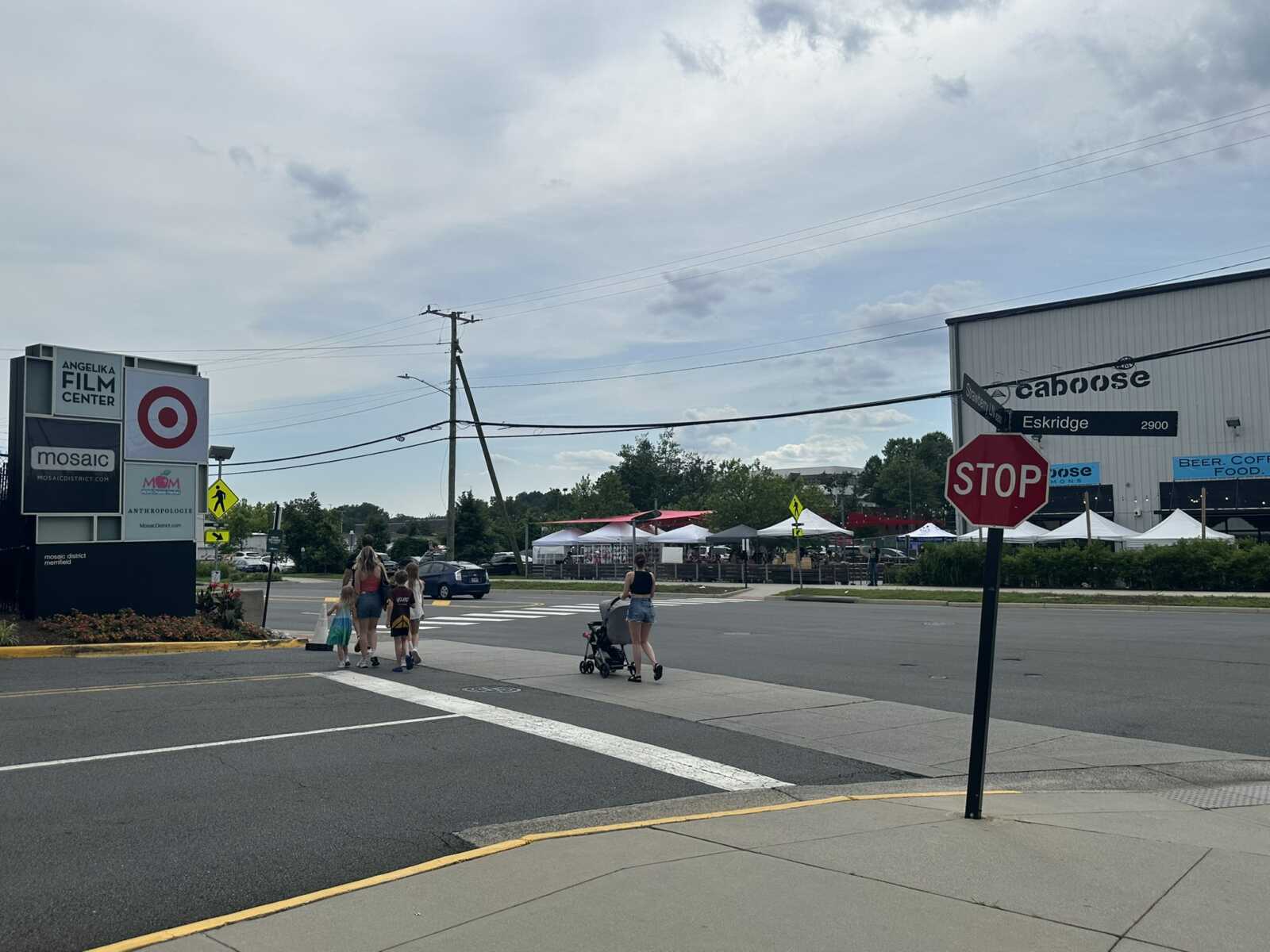
Photo: Angela Woolsey / FFXnow, via FFXnow.
October hiring beats expectations. Friday’s jobs report showed 165,000 additional payroll jobs and unemployment at 4.1%, down from 4.2%. August and September were revised up by a combined 84,000 jobs. Hourly pay rose 0.4% for the month and 3.1% over the year. The softer underside: the broader underemployment measure rose to 7.9% from 7.6%, and average unemployment duration reached 27.1 weeks. (CNBC).
Bacon Bits evade the law. Two runaway piglets led Beaufort, South Carolina, police on a chase captured by witness Kate Morrison and shared by Explore Beaufort. Police called the pair ‘Bacon Bits,’ detained them for ‘fleeing and squealing,’ and returned them to their owner. The department’s verdict: ‘No ham was done.’ (UPI).
Bottom line
Aave is adding fixed-rate expertise and Immutable is trading its custom infrastructure for Ethereum rollup security, while exchange security and ETF redemptions remain the immediate crypto story. Confirm blood-pressure concerns with a cuff, not a watch alone. Fairfax’s new crossings are funded but still being assessed, hiring was stronger than expected, and Beaufort’s smallest fugitives are back home.