Morning digest: November 8, 2026
Binance is changing its chief financial officer and winding down some European accounts, while bitcoin ETFs ended the week negative for 2026. In health, spreading short stair climbs through the workday modestly improved adherence; other small trials cover blood pressure, older-adult function and clinical rehabilitation. Locally, Fairfax has 279 new affordable apartments, Reston is set for 78 space-sector jobs, and a Virginia raccoon’s merchandise is helping pay for animal-control body cameras.
Blockchain: a CFO change, EU exits and ETF outflows
Binance replaces its CFO. Co-CEO Yi He said Saturday that CFO Kaiser Ng is leaving after more than five years to “pursue a new venture.” Justin Yek, most recently vice president of finance at payments firm Airwallex, takes over. Binance says the handover was planned over the past six months, before the Oct. 29 theft of more than $6 billion that the FBI attributes to North Korea’s TraderTraitor group. It did not give an effective date. Ng had been CFO since January 2022, after working at Kraken. Binance says it will cover customer losses from the hack. (The Block · TechCrunch)
Binance winds down some EU accounts. Users in France, Spain, Italy and Poland have reported notices telling them to withdraw. Deposits are blocked, but crypto and fiat withdrawals still work, and Binance says there is “no sudden freeze.” Customer emails reported by CoinDesk describe fees starting Nov. 29: 0.025% of remaining crypto a month or 10 USDC, whichever is higher, with balances below the fee taken in full. CoinDesk says the email itself had not been confirmed; Binance confirmed the account closures and withdrawal access. Affected accounts close Dec. 31, and anything left after that may be converted or transferred. Binance still has no license under the EU’s MiCA crypto rules and says it expects to get one in the coming months. (CoinDesk)
Weekly ETF tally: $1.28 billion out. The 12 U.S. spot bitcoin ETFs lost $1.28 billion in the week ended Nov. 6, their worst week since late June, according to The Block’s analysis of SoSoValue data. Wednesday’s roughly $74.6 million inflow was the only green day. They ended Friday about $914.1 million negative for 2026, after starting the week roughly $368 million positive; the year-to-date figure first crossed below zero on Monday. Spot ether ETFs lost $365.3 million, their sixth straight down week. Solana funds lost $26.3 million and the three Hyperliquid ETFs $15.6 million, each extending their longest outflow streak since launch to five weeks. Investing.com put bitcoin at $75,776.70 at 1:06 a.m. ET Sunday—a dated snapshot, not a live quote. (The Block · Investing.com)
Gnosis Pay follow-up: identity meets wallets. After yesterday’s breach coverage, CoinDesk reported that Rotki founder Lefteris Karapetsas said, sharing a company email, that the exposed data included his name, home address, card number and every wallet linked to his account. That customer-specific account adds detail to the disclosure; it does not establish that every customer lost the same fields. Gnosis Pay says funds were unaffected and has not disclosed the number affected. (CoinDesk · Decrypt)
Health: stair snacks, blood pressure and targeted rehabilitation
Spread stair snacks for adherence. In a 12-week randomized trial of 135 insufficiently active office workers, the active groups did three fast-but-safe 56-step ascents on four workdays weekly. Spacing them at least two hours apart improved adjusted complete-day adherence to 76.3%, versus 71.1% when grouped in one session: a 5.18-percentage-point difference (95% CI 1.39–8.97), not a fitness percentage. Paper logs and no prospective registration limit confidence. Walking outcomes were exploratory, and resting cardiometabolic measures showed no clear group effects. Discomfort affected 84–88% of active participants; two events required treatment, although none was severe or serious. This is a screened office-worker protocol, not advice for people unable to climb stairs safely. (Frontiers in Public Health).
Moving leg presses lowered pressure briefly. An acute crossover experiment in ten young men with normal blood pressure compared dynamic leg presses, matched static holds and rest. Four 2-minute sets at 30% of maximal voluntary contraction produced an approximately 8 mmHg post-exercise reduction with movement, evident 40–90 minutes afterward; static holds did not. This primary-abstract finding is not evidence of chronic hypertension treatment, does not invalidate established isometric programs and is not a fully specified home prescription. MVC is not the same as one-repetition maximum. (International Journal of Sports Medicine).
Dual-task training helped chair rises. Fifty community-dwelling adults 65 or older, including some with mild cognitive impairment, were randomized to 24 hour-long movement-plus-cognitive sessions over 12 weeks or a waitlist. Chair-rise performance improved (standardized effect 0.54), but other motor and cognitive outcomes did not differ significantly immediately afterward. Later cognitive improvements were within the training group only, not controlled evidence of brain-aging benefit. Small groups, retrospective registration and abstract-only access call for caution. (BMC Geriatrics).
Supervised rehab after vertebral fractures. Clinical trial: 48 people with osteoporotic vertebral fractures were randomized to usual activity or individualized strength, posture and balance exercise for 40 minutes twice weekly over 12 weeks; 44 completed. The exercise group improved six-minute walking distance by 38.94 m more than control (95% CI 29.59–48.28), with less pain; sleep benefits were not statistically significant. This small, single-center, unblinded trial supports discussing supervised rehabilitation—not unsupervised heavy spinal loading. The primary abstract does not establish fracture prevention or lasting benefit. (Physiotherapy Research International).
Smell training after COVID. In a small clinical randomized trial, 70 adults with COVID-related smell loss lasting at least three months were assigned to 12 weeks of odor training or no intervention; the registry specifies four odors twice daily. Among 68 completing participants, protocol-defined improvement occurred in 22/38 training participants (57.9%) versus 2/30 controls (6.7%). This used a modified smell score, not the standard full test; participants were unblinded and the analysis was per-protocol. Discuss structured rehabilitation with a clinician; long-term benefit and effects on other causes remain uncertain. (BMC Medicine). Trial registry.
General and local: housing, jobs and raccoon-funded cameras
Catharpin fire displaced five residents. A November 5 basement fire on Avonlea Way displaced three adults, two children and their dog. The smoke alarm alerted the family, and crews contained the fire before it spread upstairs. No injuries were reported; the home was posted unsafe and the cause remained undetermined in the November 6 county release. (Prince William County Fire & Rescue via Prince William Living).
Fairfax Crest opens. Fairfax Times reported November 6 that the 279-unit affordable community at the Fairfax County Government Center is open, with residents moving in earlier this month. Built on a former parking lot, it offers one-, two- and three-bedroom apartments and an on-site child care center. (Fairfax Times).
Auria Space plans Reston headquarters. The space and national-security technology company plans its first East Coast headquarters in Reston, investing $1.8 million and creating 78 jobs, according to the November 6 local report. These are announced plans, not 78 hires already completed. (Fairfax Times).
Raccoon merch buys body cameras. Virginia’s “Trashed Panda” merchandise had raised over $257,000 for Hanover’s shelter as of November 3, Axios reported November 5. About $39,000 will fund the county’s five-year, $65,000 animal-protection body-camera program; the start date was unannounced. Supervisor Faye Prichard said, “I don’t know when we’ve owed a debt of gratitude to any animal as much as we do to that raccoon.” (Axios Richmond).
Jaws of Life for a raccoon. A late-October rescue worth catching up on: Austin firefighters used a hydraulic spreader to widen a tree hollow trapping a raccoon’s head. A neighbor had called 911, and a firefighter climbed a ladder to reach it. FOX 7 reported the rescue on Oct. 27; UPI picked it up Nov. 2. A very specialized solution to being stuck up a tree. (UPI · FOX 7 Austin)
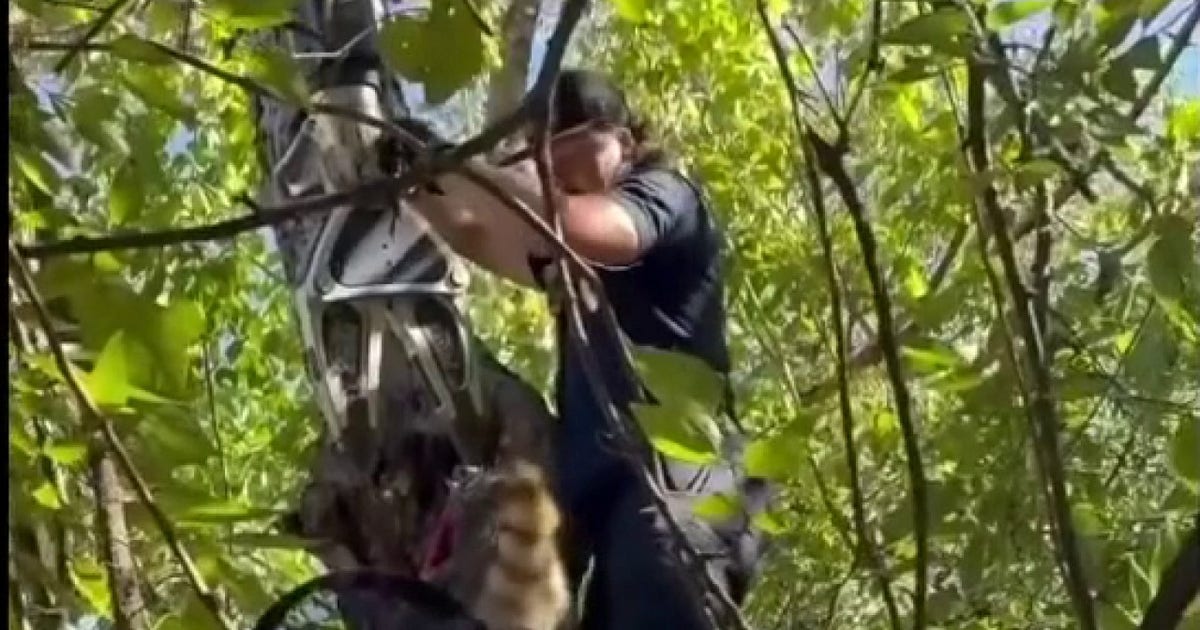
Video still: Austin Firefighters Association via Storyful, via FOX 7 Austin.
Bottom line
Binance is reshuffling its finance chief and pulling back in parts of Europe while weekly ETF outflows leave bitcoin funds negative for the year. Small human trials offer scheduling and rehabilitation leads, not universal prescriptions. Fairfax adds affordable housing, Reston has planned space-sector jobs, and one Virginia raccoon is helping fund cameras while an Austin cousin needed hydraulic assistance.