Morning digest: November 17, 2026
Bitcoin is holding near $64,500 after a four-month low near $62,000, the CFTC cleared Backpack and tZERO to run U.S. crypto derivatives exchanges and clearinghouses, and a federal judge acquitted the brothers in the $25 million Ethereum MEV case. In health, harder workouts tripled the strength and walking gains of easy ones in adults over 60, and short, frequent strength sessions eased depressive symptoms. The Nasdaq fell 2.49% Monday, New York factory growth slowed sharply, and scientists sequenced humpback whale genomes from drone-caught whale snot. About 800 drones flew toward Moscow overnight, halting Vnukovo, Domodedovo and Zhukovsky three times.
Blockchain: a shaky floor, new U.S. venues and an MEV acquittal
Bitcoin near $64,500 after a four-month low. BTC is down about 14% on the week, ether 18% (near $1,830) and solana 20%, after about $2 billion of liquidations. Spot bitcoin ETFs lost another $69 million Monday on top of $1.07 billion of outflows last week. Strategy still bought 485 BTC ($33.4 million at about $68,900 each) and now holds 850,849 BTC at a $75,452 average cost, so it is underwater at today’s price. Binance co-founder CZ denied rumors that the exchange sold crypto after its October hack. (The Block · FXStreet)
CFTC approves Backpack and tZERO. The U.S. derivatives regulator made Backpack’s TLD Markets a designated contract market, a regulated futures exchange, on Nov. 16, three days after approving its TLD Clearing clearinghouse. That opens the way for regulated U.S. crypto perpetual futures with crypto collateral and 24/7 trading. tZERO now holds both licenses too, and Chair Selig framed the approvals as support for blockchain-based market plumbing. (CFTC · The Block)
Acquittal in the $25 million MEV case. MEV, maximal extractable value, is profit taken by reordering transactions in a block. The Peraire-Bueno brothers used a 12-second exploit against MEV trading bots, and Judge Clarke in Manhattan federal court found prosecutors did not prove the misrepresentation wire fraud requires. It’s an important precedent on whether exploiting a protocol’s mechanics counts as fraud. (Cointelegraph)
Two weekend thefts through granted access. On Lighter, a perpetual-futures exchange, an attacker used one trader’s leaked API key to drain about $10.39 million USDC; Lighter says its contracts weren’t compromised, and it reports getting back about $5 million and restoring withdrawals. Separately, a Safe multisig wallet lost about $6.44 million through a Zodiac Roles module transaction, most likely with a stolen member key rather than a code bug. Lesson: keys and delegated permissions, not smart contracts, were the weak point. (Bitquery · TokenPost · Bitquery)
Briefly:
- Custodia loses at the Supreme Court. The justices declined the crypto-focused Wyoming bank’s case, so the ruling that the Fed may deny master accounts stands, a lasting barrier for crypto-native banks. (The Block)
- Invesco’s stablecoin-reserve fund goes on-chain. IROXX, a money market fund built to hold stablecoin issuers’ reserves, minted its first tokenized shares on Ethereum via Superstate: $1 million minimum, 0.20% expense ratio, but only 80,008 shares, about $80,000, so far. (Coindaro)
- CoW Swap launches on Solana. The intent-based trade aggregator starts in alpha with Kamino and waives volume fees for at least a year. (The Block)
- Trezor shipping-partner leak. About 27,000 orders through Skladon are affected, so customer addresses may be exposed; expect targeted phishing. (The Block)
Health: push the intensity, lift short and often
Harder beats easier after 60. Clinical randomized trial (120 healthy community-dwelling adults 60 and older): 24 weeks of supervised multimodal exercise, three 50-to-60-minute sessions a week, at high intensity (70% to 85% of heart-rate reserve) roughly tripled the gains of low intensity (30% to 49%). Chair stands rose 5.5 versus 1.9 reps in 30 seconds (Hedges’ g 1.52), the 6-minute walk 88.1 versus 30.8 meters, and fat mass fell 2.8 versus 0.7 kg; moderate intensity landed in between. Attendance was 88.6% to 93.5%, with no serious adverse events. Lever: build up gradually toward hard sessions; get cleared first if you have heart symptoms. No non-exercise control, 40 per group, one Chinese sample. (Archives of Gerontology and Geriatrics)
Strength training for low mood. Clinical meta-analysis (80 randomized trials, 6,123 people, mean age 57, 67% women): resistance training improved depressive symptoms overall (effect size 0.32), by 0.54 versus inactive controls and 0.21 versus other active exercise. Effects were larger with training at least 4 days a week and with sessions of 30 minutes or less. The edge over other activities was 0.40 in people with a mental illness but only 0.11 in those without, and 57 of the 80 trials enrolled people with an illness. Lever: short, frequent strength sessions as an add-on, not a replacement for treatment. (JAMA Network Open)
Yoga for knee osteoarthritis. Clinical meta-analysis: yoga improved stiffness (g 0.66, 95% CI 0.40 to 0.92), walking function (0.49) and muscle strength (0.40), with moderate certainty; quality of life didn’t change significantly. Lever: yoga alongside strengthening, easing off deep knee bends if they hurt. Doses and study sizes weren’t given in the abstract. (American Journal of Physical Medicine & Rehabilitation)
Brisk walking for sleep apnea and insomnia. Clinical systematic review (5 small randomized trials, 187 mostly sedentary adults): aerobic exercise, mostly walking at least 3 times a week at moderate to vigorous intensity, improved sleep quality, daytime sleepiness, fatigue, depression and anxiety. No pooled effect size; it doesn’t replace CPAP or insomnia therapy. (Sleep Medicine)
Briefly:
- Sugar and dementia. General, observational meta-analysis (12 cohorts, 257,761 people): the highest total sugar intake went with 23% higher risk of cognitive impairment and dementia (HR 1.23, 1.10 to 1.38), low certainty; no single sugar type stood out. Association, not proof. (Nutrition Reviews)
- Low-carb, low-fat or balanced: a tie. Clinical randomized trial (141 overweight Brazilian adults randomized, 101 finished): six months of calorie-restricted diets at 20 kcal/kg a day, balanced, lower-carb or lower-fat, all cut weight about 3% and visceral fat with no significant difference between them. Pick the plan you can keep. (European Journal of Clinical Nutrition)
- Gut bile-acid bacteria in aging, in mice. Animal research, no tested human dose: raising gut bacteria’s bile-acid-deconjugating activity with engineered native bacteria improved insulin sensitivity in aged mice; people with exceptional longevity show a similar bile-acid signature, an association only. The authors hold equity in microbiome companies. (Cell Metabolism)
General and local: a tech selloff, slower factories and whale snot
Nasdaq’s worst day since Nov. 5. On Monday the Dow fell 739.38 points (1.41%) to 51,608.17, the S&P 500 1.92% to 7,416.59 and the Nasdaq Composite 2.49% to 24,509.76, the third straight loss for the S&P and Nasdaq; Nvidia fell 4.1%. Early Tuesday, Dow futures were down 0.4%, S&P 500 futures 0.29% and Nasdaq-100 futures 0.26%. (CNBC)
New York factories slow, price pressure eases. The New York Fed’s November Empire State index fell 18 points to 7.8 from 25.5, still growth but much slower; new orders eased to 3.0. The prices-paid index dropped to 45.9 from 59.5, a sign of easing input inflation, while employment rose to 18.1, its highest since June 2022. (New York Fed)
A whale genome from a sneeze. Scientists flew a small drone with sterile petri dishes through humpback whales’ exhaled blow off British Columbia and sequenced whole genomes from the snot, a world first with no darts or biopsies. From 58 samples of 26 whales, about 84% of the DNA was the whale’s own; repeat samples across two years matched, and so did biopsies. About 16% came from airway microbes, so one breath also hints at a whale’s respiratory health. Before this, only one North Pacific humpback genome was public. (University of St Andrews via Phys.org)
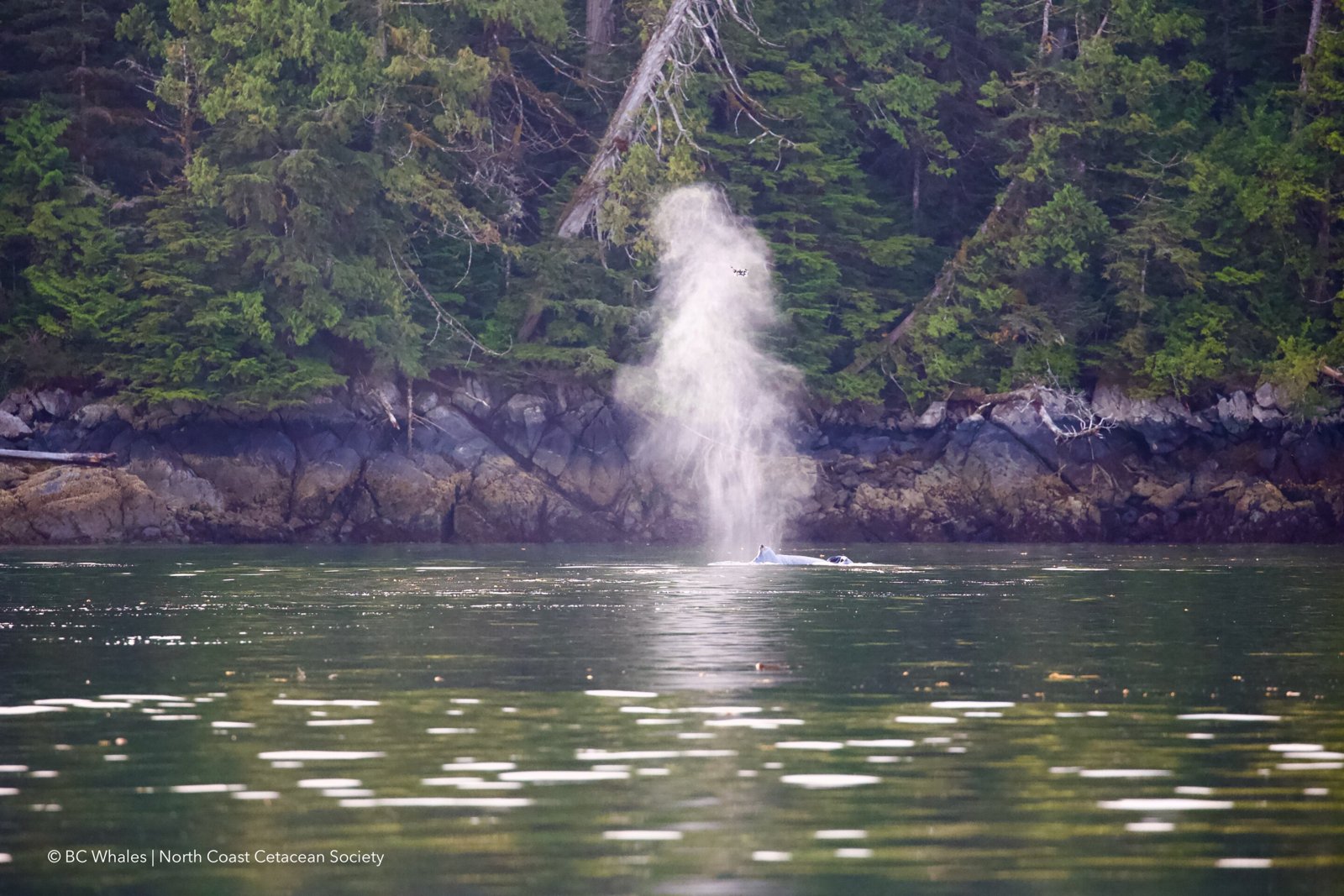
Photo: BC Whales / North Coast Cetacean Society, via Phys.org.
Russia and Ukraine: Moscow airports again
About 800 drones toward Moscow. Mayor Sobyanin said about 800 drones flew toward the Moscow region from 5 p.m. Monday to 7 a.m. Tuesday, 321 of them downed on the approach to the city. Vnukovo, Domodedovo and Zhukovsky halted operations three times overnight and Sheremetyevo once. This morning Vnukovo had 45 delayed departures, 33 delayed arrivals and about 40 cancellations, with some flights diverted to Nizhny Novgorod and St. Petersburg; Sheremetyevo says it is back to normal. (Interfax · Kommersant)
Bottom line
Bitcoin is looking for a floor near $64,500, the U.S. got two regulated crypto derivatives venues, and this weekend’s losses came from leaked keys, not broken code. If you’re over 60, harder supervised workouts pay off roughly threefold, and short, frequent strength sessions help mood. Tech led a sharp selloff, factory price pressure is easing, and a drone just read a whale’s genome from its sneeze. Moscow’s airports are digging out from another heavy drone night.